
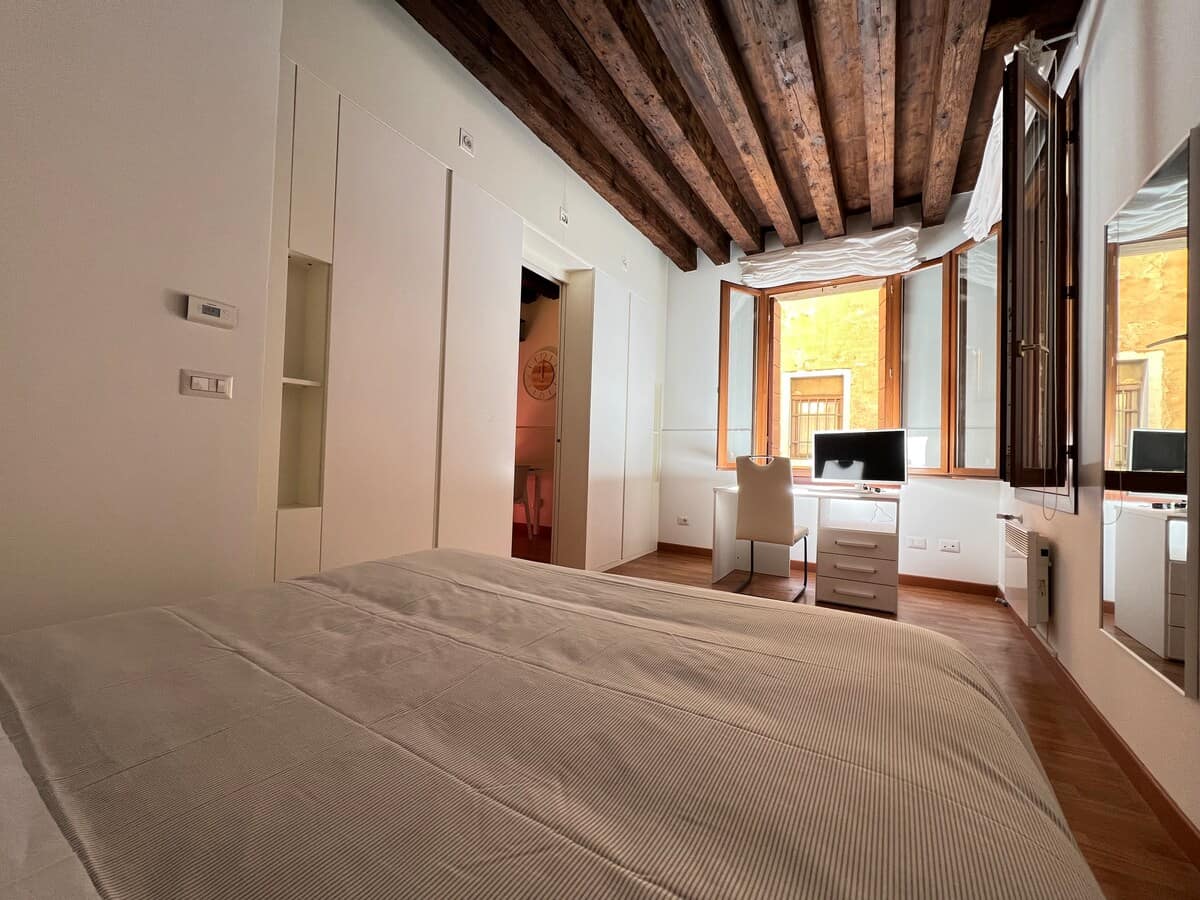
For owners who want income from a Venice apartment while keeping time there themselves, managed short letting can be a useful fit. It allows personal dates to be reserved before guest bookings and creates regular opportunities to check the home between stays. It can also produce a higher operating surplus, when achieved prices, nights sold and costs support it.
Long letting offers a contracted rent and fewer guest changeovers, with a different commitment to the tenant. The decision starts with how the home will be used, then the annual numbers. Moonlight provides short-let management only.
Which model fits the way you use your home?
| Owner priority | Managed short letting | Residential long letting |
|---|---|---|
| Spending time in Venice | Block personal dates while still unbooked, across every channel | Personal access must respect the tenancy and its terms |
| Income planning | Prices and nights sold vary; compare a full year | Contracted rent, subject to payment, vacancy and costs |
| Home care | Changeovers provide cleaning and checking opportunities, alongside wear | Lawful inspections can be agreed with the tenant |
| Work and expenses | Booking operations, utilities, laundry, cleaning and maintenance need a budget | Fewer changeovers; responsibilities depend on the lease and law |
| Commitment | Existing reservations must be honoured | Duration, renewal and termination rules apply |
Short letting deserves consideration when planned owner use matters and the apartment can sustain the operating work. Residential letting may suit an owner prioritising an ongoing tenancy over personal stays. Neither removes damage, non-payment or maintenance risk.
Owner dates and home care are practical advantages
Before opening the calendar, agree the dates you want for yourself. For later visits, request nights that are still free, confirm that every channel is closed, and allow time for cleaning or repairs. A confirmed guest reservation cannot simply be displaced by an owner visit. Airbnb explains calendar blocking and the consequences of host cancellations.
Turnovers make it possible to notice a leaking tap, humidity, a missing item or an appliance fault between guests. That is a care mechanism, not evidence that short letting causes less damage. In the written management proposal, establish who checks what, how defects are reported, who authorises urgent expenditure, and which insurance or booking protections actually apply. Frequent use also creates wear and costs.
In Venice, include stairs, access, journeys with linen over bridges and the condition of the home in that assessment. Season and events can affect demand, but an advertised peak-night price is not an annual achieved average.
Understand the 12% before comparing income
Moonlight’s management fee is 12% of gross accommodation charges before platform commissions, excluding cleaning from the fee base. It is not 12% of the bank payout. Platform charges and other operating expenses must be budgeted separately. For platform bookings, the platform pays the owner; the management fee is settled afterwards against the monthly statement. See the owner service.
Accommodation revenue, a bank payout and an operating surplus are different numbers. Income taxes, financing and initial setup then change what remains for the owner.
A worked annual comparison, before income tax
This is an illustrative calculation, not a Venice market forecast or a Moonlight case study. All inputs below are assumptions except the actual 12% management rate and its basis. Both models use annual operating surplus before income tax, financing and setup costs.
The residential example assumes €1,200 rent per month, all twelve payments collected, and €1,200 annual owner operating costs: €14,400 − €1,200 = €13,200. It assumes no vacancy or arrears; those would reduce the result.
The short-let example assumes an achieved average accommodation price of €180 per sold night, a hypothetical platform charge of 15%, management at 12% on the same gross accommodation amount, €15 other variable costs per sold night and €4,500 fixed annual operating costs. The 15% is an assumption, not an official Airbnb rate.
| Sold nights | Accommodation revenue | Platform 15% | Management 12% | Other variable costs | Fixed costs | Pre-tax operating surplus |
|---|---|---|---|---|---|---|
| 120 | €21,600 | €3,240 | €2,592 | €1,800 | €4,500 | €9,468 |
| 180 | €32,400 | €4,860 | €3,888 | €2,700 | €4,500 | €16,452 |
| 220 | €39,600 | €5,940 | €4,752 | €3,300 | €4,500 | €21,108 |
For this illustration, the €15 variable budget allocates laundry, consumables, usage-related utilities and any unrecovered cleaning cost. The €4,500 fixed budget allocates recurring owner charges, insurance, fixed utilities and routine maintenance. These are assumed combined budgets, not quoted tariffs: replace them with an itemised budget for your home. Record separately collected cleaning charges and cleaning invoices together, counting only the unrecovered balance as a cost here. Cleaning remains outside the 12% fee base. Do not count the same cost twice. Major works, initial furnishing, financing and income taxes are excluded from both models; include their actual effect before deciding.
How many nights match the residential example?
Contribution per sold night is €180 × (1 − 0.15 − 0.12) − €15 = €116.40. To match €13,200 after €4,500 fixed costs requires (€13,200 + €4,500) ÷ €116.40 = 152.06: round up to 153 sold nights.
Keeping all other assumptions unchanged, a €150 average needs 188 nights; a €210 average needs 128 nights. At 120 nights in the table, short letting produces less than the residential example. Higher potential does not mean a better result at every occupancy.
If 28 nights are reserved for the owner and 14 for maintenance, 323 nights remain available. Selling 153 means 47.4% of those available nights, not of the whole year. This is arithmetic, not observed Venice occupancy. Available calendar nights are not automatically legally sellable, and blocking high-demand dates may also change the achievable average price.
A compliance check before a revenue projection
Position as checked on 5 November 2026. For tax purposes, locazioni brevi are residential rental contracts of no more than 30 days, including day 30, between natural persons acting outside business, under the applicable statutory conditions. Tourist purpose is a separate distinction: a contract over 30 days is not automatically an ordinary residential long let. See the Agenzia delle Entrate guide.
Before launching, verify:
- The lawful basis for letting the particular home, regional ROSS1000/CIR steps, CIN, any business SCIA, guest reporting through Alloggiati Web and tourist-tax obligations. Follow the Comune’s procedure, updated April 2026.
- CIN display and applicable safety equipment under the Ministry’s BDSR FAQs. The gas/CO detector exception depends on the absence of installations and risk specified there. A CIN alone does not certify compliance.
- Wastewater compliance in the historic city and islands under the municipal vademecum.
- Your operating and tax status. From 2026, allocating more than two apartments to short letting during the tax period triggers the statutory presumption of business activity. This concerns the same owner’s apartments nationwide, not a manager’s combined portfolio for different owners. See Law 199/2025, article 1(17) and Veneto’s February 2026 FAQs.
Residential arrangements also differ: ordinary 4+4 contracts are not the only form. Consider Law 431/1998 and the Venice territorial agreement of July 2026. Have a qualified adviser compare the actual contracts and tax regimes. Do not assume income tax is calculated on the payout after platform and management fees. The 2024 tax guide’s old apartment threshold has been superseded by the 2026 rule above.
Questions owners ask
Does short letting always earn more?
No. It can outperform residential letting when prices, sold nights and costs support it. The example produces €9,468 at 120 nights and €16,452 at 180, against a residential benchmark of €13,200, all before income tax.
Can I use the apartment myself?
Personal dates can be reserved while they are still unbooked and closed across every channel. Existing reservations must be respected; there is no unrestricted right to cancel them for owner use.
Does regular turnover prevent damage?
No. It creates opportunities to clean, inspect and report problems, while also causing wear. Checks, expenditure approvals and coverage should be agreed in writing.
What is the 12% calculated on?
Gross accommodation charges before platform commissions. Cleaning is excluded from the management-fee base; platform costs and other expenses are separate.
Are 153 nights a reliable target for my apartment?
They are only the rounded threshold in this hypothetical example. Your prices, costs, owner dates, legal availability and tax position will change the comparison.
Does Moonlight arrange long lets too?
No. Moonlight offers short-let management. The residential comparison helps owners decide whether that service fits their home and plans.
Put your own apartment into the calculation
Gather the location, permitted capacity, condition, access details, available income statements, recurring costs, setup requirements and dates reserved for personal use. These are the inputs for a useful assessment. For wider local context, see Practical Venice.
Request a short-let assessment with the apartment details and planned owner dates. The aim is to establish whether the home, calendar and costs support managed short letting.